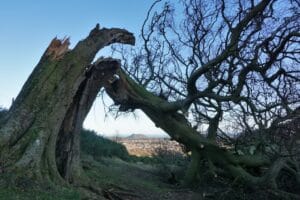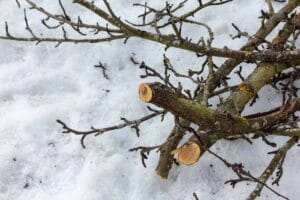

When a tree is cut down, many homeowners believe that everything disappears along with the trunk. However, the roots of a cut tree remain underground and continue to evolve for several years after tree removal. Their behavior depends on several factors, including the tree species, its age, health, and whether or not stump removal is performed.
In this article, discover what happens to the roots of a cut tree, how long they survive after tree removal, and in which situations stump removal is recommended.
Do the Roots Die Immediately After Tree Removal?
No. The roots of a cut tree do not die immediately after the tree is removed. Once the trunk is removed, they no longer receive the nutrients produced by the leaves through photosynthesis. They therefore gradually begin to die back, a process that can take several weeks or even several months.
Some tree species are known to produce new shoots from the roots of a cut tree, even several months after removal. This is particularly true of maple trees, poplars, and willows, which can produce new growth around the stump even after the tree has been removed.
How Long Does It Take for the Roots of a Cut Tree to Decompose?
Root decomposition varies considerably from one tree to another. Several factors influence how quickly they will naturally disappear.
Moist soil will generally encourage faster decomposition than dry soil, while clay or highly compacted soil can slow the process. Root diameter also plays an important role: smaller roots can break down within a few years, while larger roots can remain in place for more than ten years.
The tree species also affects this timeline. Denser wood generally decomposes more slowly than fast-growing species. It is therefore impossible to determine an exact timeframe without assessing the situation on site.
What Problems Can Roots Left in Place Cause?
The roots of a cut tree can continue to occupy a significant amount of space underground and cause various issues depending on their location.
New Shoots Appearing
Even after tree removal, some species continue to produce new shoots from their root systems. These shoots can quickly become invasive and require regular maintenance if they are not eliminated at the source.
Ground Settling
As roots decompose, they leave cavities in the soil. Over time, this can cause the ground to settle, create uneven areas in the lawn, or complicate certain landscaping projects. In these situations, removing the stump and performing stump removal can often help prevent these problems.
Obstacles for Future Projects
Roots left underground can also interfere with several residential projects, including:
- installing a swimming pool;
- building a deck;
- installing a fence;
- installing interlocking pavers;
- planting a new tree;
- certain work near foundations.
In these situations, stump removal is often recommended to create a clean starting point. Before building a deck, installing a swimming pool, or laying interlocking pavers, it is often recommended to remove the stump in order to completely clear the area.
Is It Always Necessary to Remove the Roots?
No. In many situations, it is not necessary to remove the roots of a cut tree. This may be the case in a wooded area, when no landscaping project is planned, or when the tree was located far from buildings and infrastructure.
However, it is preferable to intervene when the stump is preventing a future project, new shoots continue to appear, the ground begins to settle, or the roots are an obstacle to future landscaping work. A professional assessment can help determine whether stump removal is actually necessary.
What Is the Difference Between Tree Removal and Stump Removal?
Tree removal involves cutting and removing the tree down to ground level. Once this step is complete, however, the stump and root system remain in place.
Stump removal is a separate service that involves removing the stump as well as a significant portion of the roots. This operation frees up space for new landscaping projects and helps prevent problems associated with root decomposition.
These two services are therefore complementary, but they do not meet the same needs.
How Do You Remove a Stump and the Main Roots?
Two main methods are used depending on the characteristics of the property and the work that needs to be completed.
A stump grinder is the most common solution. This machine gradually grinds the stump below ground level, effectively removing the visible portion while minimizing damage to the surrounding area. This method is quick and suitable for most residential properties.
Excavation, on the other hand, is preferred when the roots are particularly extensive or when a construction project requires the complete removal of the stump and its root system. This technique is more invasive, but it leaves the area completely clear.
The method chosen depends on the tree’s location, the size of the stump, and how the land will be used in the future.
Can You Plant a New Tree in the Same Location?
Yes, but it is often best to wait and properly prepare the soil before planting a new tree.
After stump removal, it is much easier to plant a new tree because the old roots of the cut tree are less likely to interfere with the development of the new root system. In some cases, it may also be necessary to add topsoil to replace the soil removed during the work.
When the stump is still present or the roots are extensive, it is generally recommended to plant the new tree slightly to the side to provide it with a better growing environment.
When Should You Call a Professional?
The assistance of an arborist is strongly recommended when the tree is large, located close to a home, power line, or other infrastructure, or when a landscaping project is planned.
An arborist can also determine whether simple tree removal is sufficient or whether stump removal is recommended based on your project.
Trust Emondage SBP for Your Stump Removal
Now that you know what happens to the roots of a cut tree, it is easier to determine whether they can be left in place or whether stump removal is preferable. Every situation is different and depends on factors such as the tree species, the location of the tree roots, and your future landscaping plans.
Every situation is different. This is why a professional assessment can help determine whether stump removal is necessary or whether the roots can safely be left in place. Read our article Can Tree Roots Be Cut? to learn more.
The Emondage SBP team can assist you with all your tree removal, stump removal, and tree maintenance needs. Contact us for an assessment tailored to your property and expert advice.