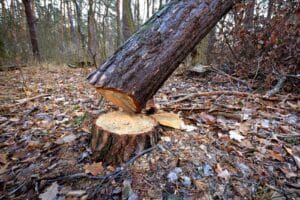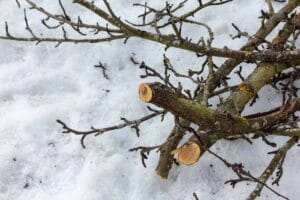

Quebec’s unpredictable weather, including strong winds, thunderstorms, and ice storms, can cause a tree to fall. In other cases, a diseased, aging, or insect-damaged tree may also fall without warning.
Regardless of the cause, a fallen tree can pose a serious risk to your safety, your home, and your property. It is therefore important to assess the situation quickly and take the right steps to limit further damage.
In this article, we explain how to safely remove a fallen tree.
Assess the Situation Before Removing a Fallen Tree
Before taking any action, take the time to assess the situation without getting unnecessarily close to the tree.
Does the Fallen Tree Pose an Immediate Danger?
If the fallen tree on your property is located near power lines, a house, vehicle, fence, or swimming pool, extreme caution is required. Similarly, if some branches are still hanging or the trunk appears unstable, it is best to avoid attempting any work yourself.
Why You Should Avoid Cutting a Fallen Tree Yourself
Even when it is lying on the ground, a fallen tree can still be under tension. Depending on how it fell, the weight of the trunk and branches can create significant forces that may suddenly be released during cutting.
An incorrect cut can cause the trunk to shift unexpectedly, a section of wood to move, or a compressed branch to suddenly spring back. Using a chainsaw in these conditions can significantly increase the risk of injury, especially without the necessary experience.
This is why it is strongly recommended to leave this type of work to a qualified arborist. Their expertise allows them to assess the tension within the tree and use the appropriate techniques to work safely.
How Is a Fallen Tree Removed?
The process varies depending on the size of the tree, its location, and the damage it has caused. In most cases, the work begins with pruning the branches to reduce the weight of the trunk and make it easier to handle.
The trunk is then cut into several sections following a precise cutting sequence. This step requires considerable experience, as an improper cut can cause the wood to move unexpectedly.
Finally, the different sections are removed using the appropriate equipment. Depending on the weight of the logs and the accessibility of the property, an arborist may use a winch, skid steer, or even a crane to move the wood without damaging your property.
What Should You Do With the Branches and Wood?
Once the fallen tree has been removed, the branches and wood still need to be dealt with. Many homeowners choose to have the branches chipped into mulch that can be reused in flower beds or around other trees.
The trunk can also be kept for firewood when the tree species is suitable. If you do not wish to keep the wood, the debris can generally be taken to an eco-centre or collected through municipal green waste collection programs.
Depending on their condition, some pieces of wood may even be reused for landscaping or DIY projects.
Should the Stump Be Removed?
It depends on how the tree fell. When a tree has been completely uprooted, the stump is often removed along with the roots. However, if the trunk broke near ground level, the stump will usually remain in place.
Although it may not be dangerous in the short term, stump removal is often recommended. Removing the stump can free up space for a new landscaping project, help prevent fungal growth or new shoots, and make the property easier to maintain.
When Should You Call an Arborist?
In certain situations, professional assistance is essential. This is especially true when dealing with a large tree, when it has fallen near a home, or when it is resting on a fence or another structure. A tree that is caught in another tree, difficult access to the property, or the presence of power lines also require special precautions.
By hiring an arborist, you benefit not only from specialized equipment, but also from the expertise required to remove the tree safely, efficiently, and without causing additional damage.
Can a Tree From Falling Be Prevented?
Although it is impossible to prevent every tree from falling during extreme weather events, several measures can significantly reduce the risk.
Regular inspections by an arborist can help identify:
- dead branches;
- signs of disease;
- cavities in the trunk;
- weakened roots;
- structural problems that could compromise the tree’s stability.
Preventive tree pruning can also help remove weak branches before they become dangerous and improve the overall health of the tree.
Removing a Fallen Tree Safely
A fallen tree should never be taken lightly. Before attempting to remove it, it is important to assess the risks and determine whether the situation can be handled safely.
Every situation is unique and depends on several factors, including the size of the tree, its location, and the damage it has caused. When the situation presents a risk, hiring a professional arborist remains the safest and most effective solution.
Do you have a fallen tree on your property? The team at Émondage SBP has the expertise and equipment needed to respond quickly and safely. Contact us today for a free estimate.